Rights and access
We secure and protect members' access to fish and harvest for food, social, and ceremonial purposes, and we work with government to make sure those rights are respected.
Protecting the lands, waters, and harvesting rights of NBAPC members through Indigenous-led stewardship, science, and community action.
The NBAPC Natural Resources Department works to protect the lands, waters, and species that matter to our members, and to ensure members can exercise their harvesting rights with confidence.
Our work began with Fisheries and Oceans Canada's Aboriginal Fisheries Strategy following the landmark Sparrow decision, which affirmed the right of Indigenous Peoples to fish for food, social, and ceremonial purposes. Since then, the department has grown to include habitat restoration, species at risk research, freshwater monitoring, and community-led stewardship across New Brunswick.
We bring Traditional Ecological Knowledge and Western science together, and we place members at the centre of everything we do: as harvesters, Knowledge Holders, field workers, and stewards of their local environments.
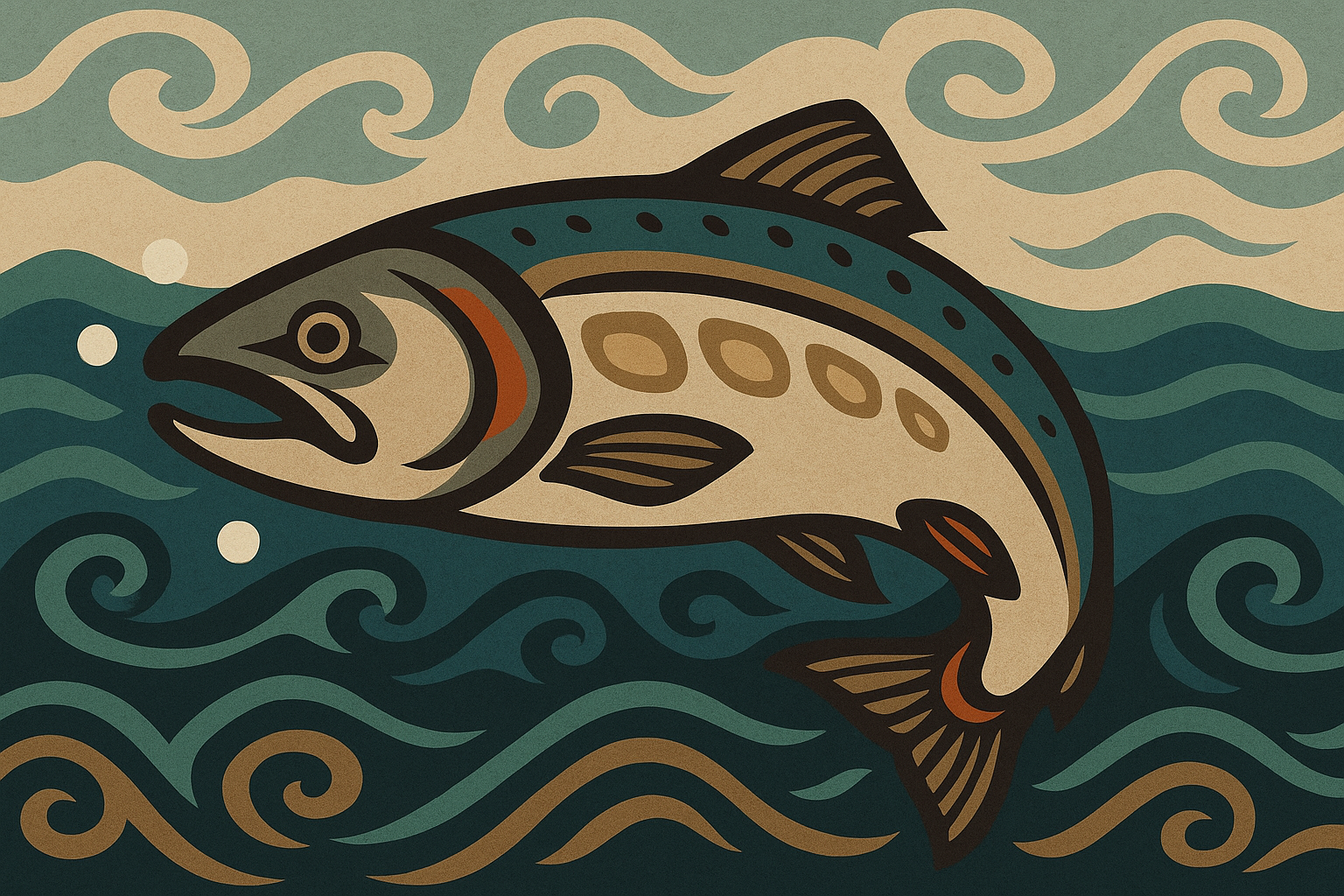
We secure and protect members' access to fish and harvest for food, social, and ceremonial purposes, and we work with government to make sure those rights are respected.
Our field teams collect water quality data, survey fish and mussel populations, and study habitat health so that decisions about our lands and waters are grounded in evidence.
We support members, Locals, and Zones to take action in their own communities, guided by Elders and Knowledge Holders and passed on to the next generation.
Our programs are supported by federal, non-profit, and academic partners, and each one is shaped by the priorities of our membership.
Food, Social, and Ceremonial Fisheries
Through the Aboriginal Fisheries Strategy (AFS) with Fisheries and Oceans Canada, NBAPC holds a communal licence that allows members to harvest a variety of aquatic species for food, social, and ceremonial (FSC) purposes.
We prepare and distribute licence booklets to members, monitor harvesting activity, and compile harvest reports that are shared with DFO. An AFS Advisory Committee of members helps guide our discussions with DFO and supports decisions about the licence.
Members who fish under the licence are asked to report their harvests. Accurate reporting strengthens our role in fisheries management and helps keep members on the water.
DFO Aboriginal Fund for Species at Risk (AFSAR) and Canada Nature Fund for Aquatic Species at Risk (CNFASAR)
Many of the aquatic species our communities have relied on for generations are now at risk. Our field teams work across New Brunswick's rivers to find out where these species are, what threatens them, and what their habitats need to recover.
This work includes environmental DNA (eDNA) sampling, electrofishing, freshwater mussel surveys, water quality monitoring, and studies of fish passage and stream connectivity.
We are also developing a Community Action Plan for species at risk, built with input from our members. The plan will turn recovery strategies into clear, practical actions that members, Eco-Guardians, and other Atlantic organizations can take to protect these species.
WWF-Canada 2 Billion Trees
Healthy forests along our rivers and streams keep water cool and clean, prevent erosion, and provide habitat for fish and wildlife. Working with private landowners, NBAPC plants native trees and shrubs on sites across the Wolastoq watershed.
We also partner with conservation organizations, including the Nature Trust of New Brunswick, to restore forests damaged by storms and past land use.
Are you a landowner in the Wolastoq watershed with land that could benefit from planting? Are you a member interested in paid tree planting work? We would like to hear from you.
DFO Indigenous Habitat Participation Program (IHPP)
Stewardship is strongest when it is led by community. Through this program, we bring members together on the land and water through events such as youth fishing days and ceremonial feasts.
We also support Locals and Zones to take the lead in caring for their own environments, with the training, tools, and connections they need to do that work safely and effectively.
Canada Water Agency Wolastoq/St. John River Freshwater Ecosystem Initiative
The Wolastoq is at the heart of our territory. NBAPC monitors water quality and environmental indicators along the river to track its health over time.
In partnership with the University of New Brunswick, we are developing a shared monitoring method so that Indigenous and academic teams can collect consistent, comparable data year after year. We are also creating community monitoring guides so that Locals and Eco-Guardians can take part in monitoring their own waterways.
Member-led stewardship
The Eco-Guardian Program gives members a direct role in protecting, managing, and restoring the lands and waters in their territories. The program currently works alongside our IHPP and Canada Water Agency initiatives and is growing into a standalone program of its own.
Our vision is an Eco-Guardian Team in every Local: a small group of Elders, Mentors, and Youth working side by side. Elders and Knowledge Holders share cultural teachings and land-based knowledge, while mentors provide training in scientific monitoring and data collection.
Eco-Guardians take part in activities such as:
Eco-Guardians receive training, a safety toolkit, and First Aid certification, along with opportunities for paid work on our projects.
There are many ways to be part of this work. To learn more, email us at naturalresources@nbapc.org.
Members of all ages are welcome. Gain training and hands-on experience, and help care for the lands and waters in your community.
If you own land in the Wolastoq watershed, you can host a native tree planting that restores habitat and protects your property from erosion.
We offer paid seasonal opportunities for members in tree planting, field surveys, and environmental monitoring.
A complete guide to freshwater mussel species and their conservation in the Maritimes, available in four languages to support education, monitoring, and language revitalization.
The Maritimes Freshwater Mussels Guide, English edition.
Guide des moules d'eau douce des Maritimes, édition française.
The Maritimes Freshwater Mussels Guide, Mi'kmaq language edition.
The Maritimes Freshwater Mussels Guide, Wolastoqey language edition.
Questions about fishing licences, our programs, or partnership opportunities? We would be happy to hear from you.
Our work is made possible through the support of Fisheries and Oceans Canada, WWF-Canada, and the Canada Water Agency, and through collaboration with the University of New Brunswick, the Nature Trust of New Brunswick, and many landowners and community members across the province.